The Beginnings of Sullishak
“The history of what became Sullishak, as best I can recall it. I was in the military service when our story begins.” — Wes Sullivan
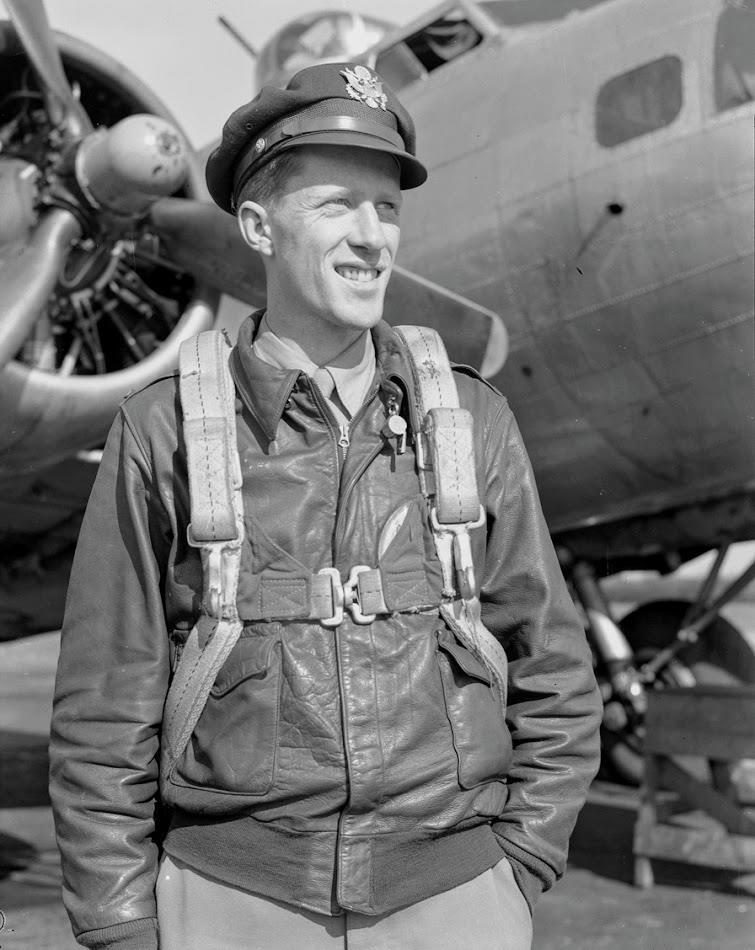
The Beginnings
My Aunt Vera and Uncle Jewell Lantz decided they wanted a beach cabin, so they bought three lots from George Betts in the Lincoln Beach subdivision. Betts was a rascally character who ran a small store at the entrance road to the subdivision on Highway 101. He'd formed his subdivision shortly after the paved highway was put in along that section of the Coast in the mid-1920s. By the time the Lantz's made their purchase, there were already 15 houses in the subdivision.
The lots were about 25 X 80 feet each. Vera and Jewell’s lots sat at the end of the road to the beach, perfectly positioned for an ocean view.
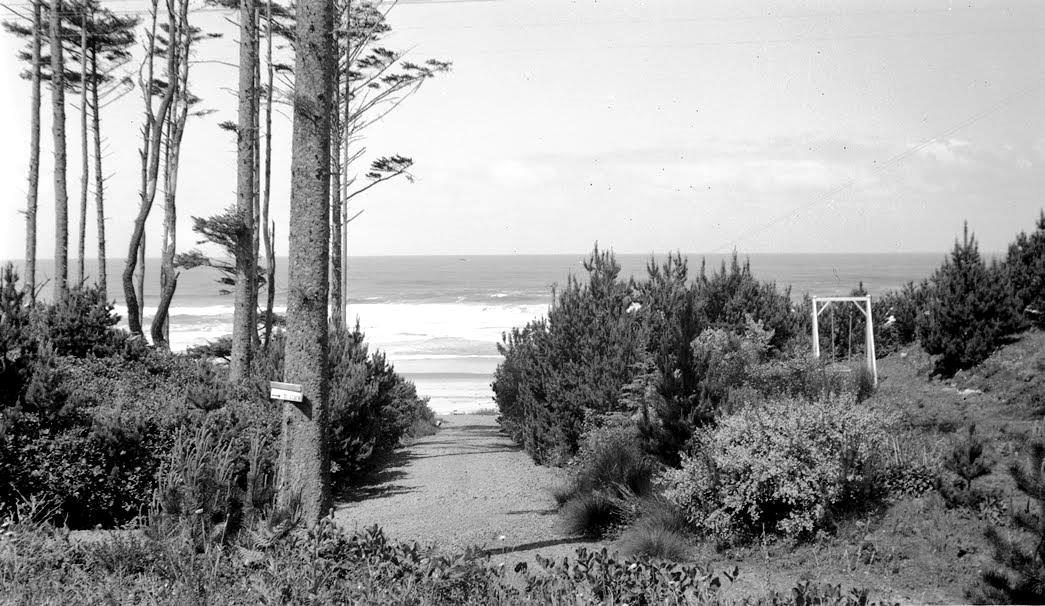
My mother, Orma E. Sullivan, lived with her mother, Emma Beary, in Portland. Orma never had a house of her own since her divorce from my father when I was about 10 years old. Mother decided to buy adjacent to the Lantz's on the south. She bought four lots. Although the view from her property didn't have a straight shot down the road, it still qualified as ocean view land.
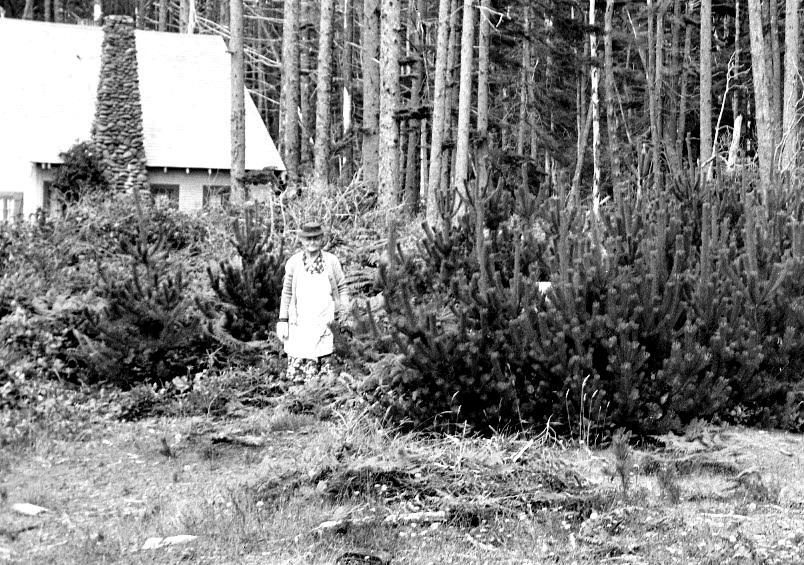
My grandmother Emma died while I was overseas, but as the picture attests, she got to the beach to see the land her daughters had purchased, and she spent one afternoon helping to clear away brush.
One of the first trips Elsie and I took after I returned from the service and established residence at Salem was to the Coast to examine the property my mother had purchased. It was so soon after the war that the warning signs were still in place on the highway approaching the Coast alerting drivers that blackout conditions prevailed all along the coastal section.
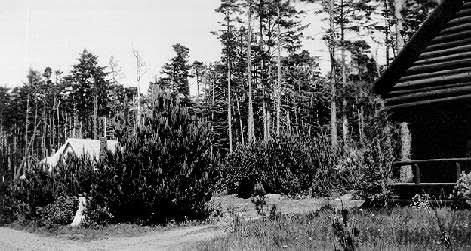
The property was thickly covered with salal and other shrubbery. I remember that we walked north to the end of Mina Avenue, only a few hundred feet, and out to a crude shelter made of shiplap lumber where the coastal guards stood watch during the war.
This was in the fall of 1945. It would be a year and a half before we would begin constructing the cabin.
From the archive
- Ownership — the land, lot by lot, from the Siletz to today
- Orma Sullivan — who bought the four lots
- Wes's History — the same memoir, as the old website had it
- Cabin History — the dated timeline, starting in 1942
- The Lot Next Door — 4030 Mina, one of Orma's four lots, still empty