Salmon Bakes and Social Gatherings
“Cut your own wood and it will warm you twice.” — Wes Sullivan
My mother never allowed anyone else, other than Elsie and I, to use the place. We couldn't offer the place to our friends. I was working nights and into the weekends, so we had a hard time inviting people to go down with us. As a result, the cabin sat, year after year, with a minimum of use.
It was a lot of work to get ready for a trip there, especially when Dave and Bill arrived. At times, we wondered whether the effort had been worth it, especially on cold nights in that drafty place.
At this distant time, it is a little hard for me to sort out the sequence of events in the progressive improvement of the cabin. Perhaps some of the younger members of the family will have better memories and will put things in their proper chronological order.
The sealing of the interior walls with plywood after 14 years marked a turning point in our feeling about the place. When the walls were 2 x 4s and shiplap, none of the other deficiencies of the place stood out much. However, there was one deficiency that couldn't be ignored.
I alluded earlier to the expedient way in which we disposed of effluent, in lieu of a workable septic tank field. This meant we had a limited capacity for using the toilet. This became painfully obvious when we invited lots of people to the place.
From its inception I used the cabin as a retreat for my Sunday School class. Every summer, I had the boys there for two or three days.
When Elsie and I took over the high school class, as our older children entered that age bracket, we rented the log cabin next door and used the two cabins as dormitories, holding our meetings in the spacious log cabin. It worked wonderfully.
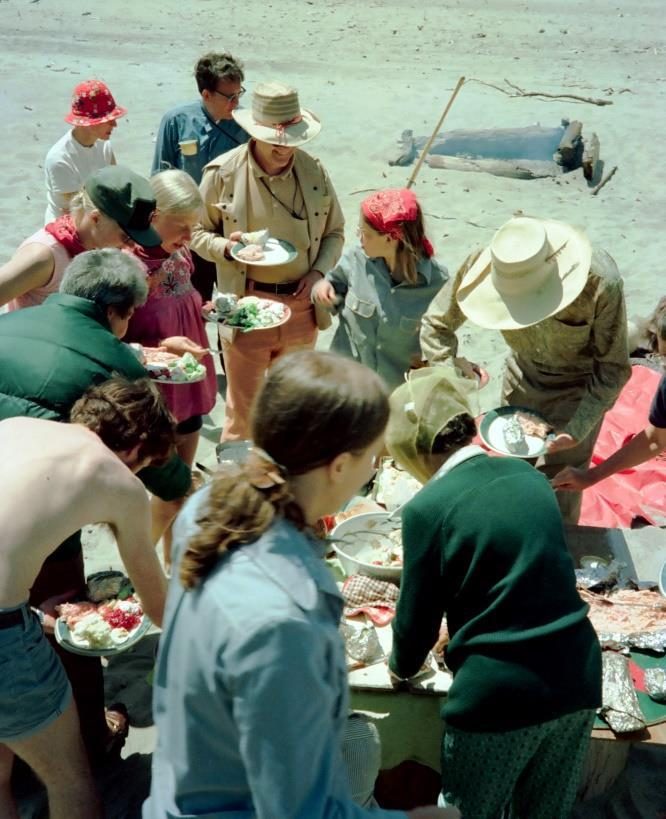
The most important social events we held in the cabin, however, were our salmon bakes. We had these for all the groups to which we belonged, but the biggest and best was for the Statesman newsroom staff. The beer flowed freely.
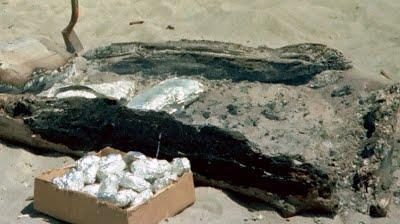
I would get up early and collect appropriate driftwood from the beach. I dug holes for poles on the windward side of the site, stretching plastic between them as a windbreak. I'd find pieces of plywood for use as tables and rearrange logs for seating. I was young and vigorous in those days.
Then, an hour-and-a-half before the event, I'd start a huge fire in front of the site on the beach, letting it burn down to coals and then arranging the biggest pieces into the form of a box within which the sand would be hot enough to cook the salmon. Elsie, in the meantime, would double-wrap the salmon in foil and the potatoes likewise. About a half-hour before dinner time, we would gently plop the salmon atop the hot sand and coals and the potatoes around it.
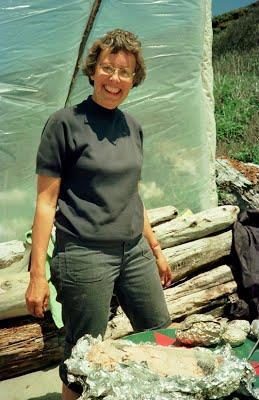
When the guests arrived with their salads and desserts, I'd be standing by the firebox with my "potato-picker" in hand. This was a device made out of an old hoe handle and a wire coathanger with which I could turn the potatoes over so they cooked on both sides.
Elsie supervised the inspection of the salmon as it neared completion. We slid it onto a clean board, removing all sand and coals. She then unwrapped the end of the salmon and checked the center of the fish to be sure it was done. We served no salmon before its time.
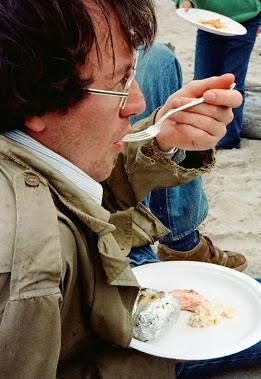
All our salmon baking was done without sand in the food and without rain. We had scores of salmon bakes, and no rainout.
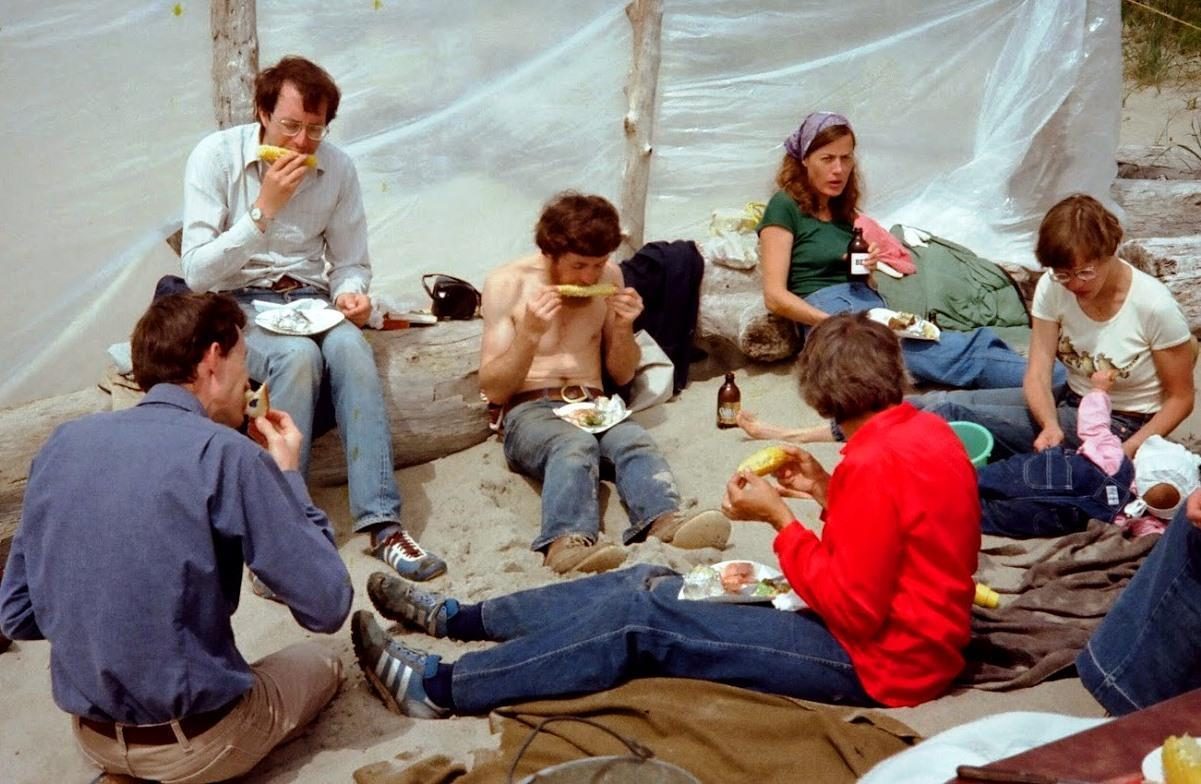
However, in the back of my mind, all during these events, I kept a latent concern that Nancy or one of the other children would whisper in my ear that the toilet was overflowing. We expected a lot of that inadequate sewage system.
I will not describe the process that had to be gone through to get the toilet operating again, except to say it was execrable.
I shouldn't let these years slip by without mentioning the annual gathering of "the cousins." Each summer Elsie hosted Nancy and Jack's kids, along with our own, for a week of activities resembling those she enjoyed when she was a youngster. It was a loving act on her part. I'll let some of the cousins tell, in more detail, about those weeks.
I also should interrupt the cabin narrative to mention our interest, in the summer of 1968, in finding our way from our cabin back, on logging roads, to the Siletz River. That venture, resulting in our acquisition of nearly 54 acres along the river, is worth a book in itself. But, again, that is another story.
As I said earlier, my memory is not reliable enough to keep cabin improvements in their logical order. By the late 1960s, however, the family was grown enough to share in the decision-making about the cabin, if not to be available for help with remodeling. But I was still capable.
Sometime about 1970, during a family weekend together, Elsie made a persistent pitch for major improvements. She was tired of having old, worn-out linoleum rugs in the living room with bare, dirty floor in between. She was tired of having old, leaky windows in the front room. She'd had it with the cloth covering of the cupboards and inadequate storage space in the kitchen.
What she proposed sounded like an enormous amount of work to me, and I knew who would be doing most of it. Me. And it was expensive. I did what I could to discourage her. No avail. What's more, she had support from within the rest of the family.
So I gave in gracefully and ordered double-paned windows for the front of the cabin and for the kitchen. We rented a huge sander, put the old linoleum rugs upstairs and went to work on the floors. We picked out a durable linoleum pattern and laid that over the entire room.
The replacement of the windows went better than I expected it would. We also put insulation in the walls where we could. I was amazed at the difference it made in the enjoyment level of the cabin to have those insulated windows. Elsie, as usual, had been right all along.
However, as always happened, improving part of the cabin just made other parts look worse. In this case, it was that battered and stained ceiling. I could solve the problem for myself by just ignoring the whole thing, but it just wouldn't go away.
The draftiness of the cabin had to be dealt with. The most logical starting point was the ceiling, with both warm air and noise going easily up to the second-floor sleeping loft.
With my usual absence of seeking professional or skilled advice, I decided the best way to deal with the problem was to staple Firtex panels to the ceiling joists. As a clever means of dealing with need for insulation, I would pour mica insulation in atop the panels as I stapled them up, solving two problems at one time.
One sunny Sunday afternoon the following spring, as my mother sat in the front room with her friends, one of the ceiling panels let loose, cascading mica insulation down on top of their heads. It seemed that the mica gathered moisture, becoming heavier and heavier. Once one panel let loose, the others in that row followed suit, and then the next row took its turn. As those underneath stared up in amazement, they were covered with mica.
What a mess. After I cleaned it all up, I reattached the panels to the ceiling, minus the mica. Now, in addition to the water stains from the leaks in the front of the cabin, the ceiling had nail heads showing and other scars from the experience. But in our unfinished cabin, a few more scars made little difference.
I'll never forget the sequence of pictures of which the photographs below were a part. It was Christmas morning, at our apartment. I would guess 1977 or '78. As was customary, I passed out the presents. When it came to my present from Dave and Janet, I opened a small box, to find a set of photographs.
The first one was of the stained beach cabin ceiling. I certainly had no idea of what was coming.
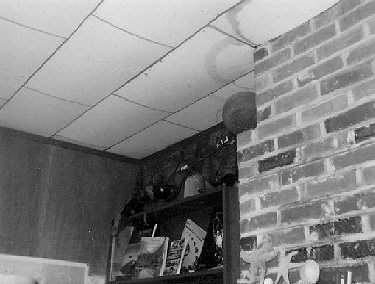
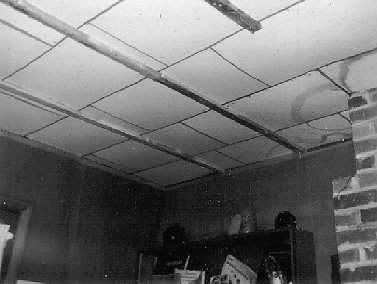
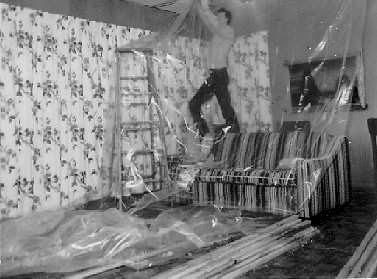
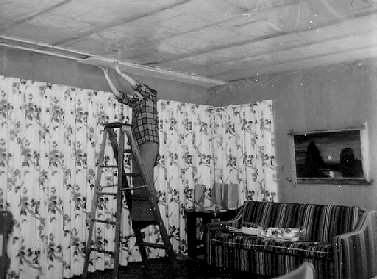
As I turned to the next photo, I saw Dave applying plastic sheathing to the furring strips. It was kind of like a time-lapse photo, with each succeeding photograph recording a new phase of the ceiling project.
I remember wondering to myself how Dave and Janet could have faked the photos. It never occurred to me that what I was seeing in the pictures could be real. By the time I got to the picture of Janet putting up new ceiling tiles, I began to suspect that what I was seeing was not make-believe. When I reached the end of the series, the entire new ceiling was apparently in place and the molding reattached.
When I recovered from my shock, I had to ask whether this really was true. Dave and Janet had taken an entire weekend to work on the ceiling project, finishing up about 2 or 3 a.m., snapping pictures as they went.
They confessed they had faked the finish. In fact, they hadn't completed the section around the chimney. Elsie and I truly enjoyed going down and putting the final few tiles into place. What a generous thing to do, refinishing that ceiling, and what a load off my mind, to have that job out of the way.
Again, I'm not sure of the sequence of events, but as long as this picture depicts the installation of the sewer, I'll take that next.
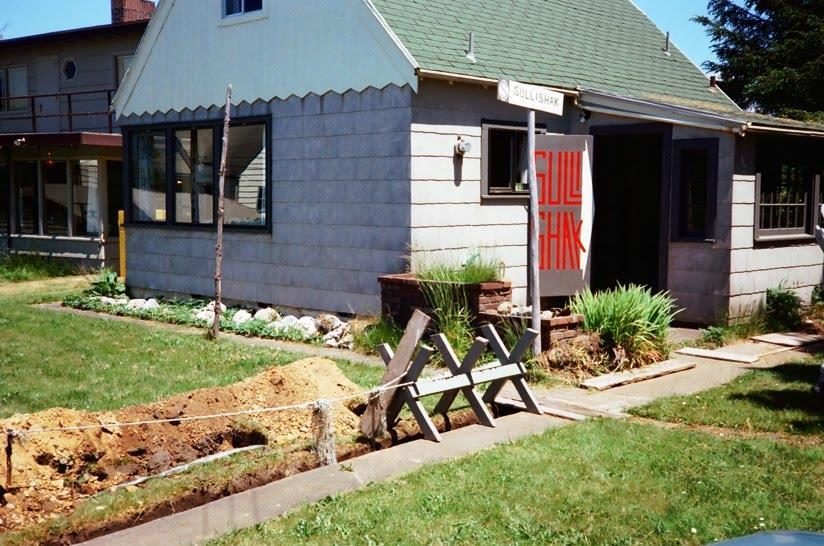
As I mentioned earlier, the seepage from the septic tanks created a genuine health hazard at Lincoln Beach, one that was common throughout all that section of the Coast. It resulted in a moratorium on building, something that couldn't be tolerated for long with the pressure of growth.
The advent of a sewer system offered a permanent solution to our effluent problem. That, along with the other improvements, was making the cabin a year-around place to stay.
The septic tank was in the back of the house, which meant that all the plumbing ran to the rear of the lot. The homeowner, namely me, was responsible for bringing the lines to the street for connection to the sewer.
I decided on the use of plastic pipe. My first, feeble efforts at putting this pipe together were reminiscent of the ineptness I'd displayed when I'd built the place. I quickly gave up and appealed to Dave and to a man in Lincoln City who understood how to put in sewer lines.
He wasn't a plumber. Legally, he wasn't allowed to install the sewer. He could tell us what to buy and how to put it together. However, once we had all the stuff purchased and started to lay it out, he got carried away and did it all for us. All we did was to dig the appropriate holes, a job for which I was qualified.
It was a great success. We've never had a problem with it. And it was, perhaps, the best single improvement to the cabin.
Before I leave plumbing, however, I should mention another ongoing cause of concern, from the beginning of the cabin, clear to the present. Every year around late November or early December, someone has to winterize the place. That involves turning off the electricity by pulling the main switches in the fuse box, draining all the water from the pipes, putting antifreeze in the toilet and the traps, and turning off the water at the back of the house.
Over the years, however, we've failed to do this when we should, and we've paid the price. On one occasion, in 1962, we turned the water on in early March and had the toilet freeze and crack on the 14th of March.
On another occasion, Elsie and I made an emergency trip to the Coast on the 14th of December, in the face of a blizzard, to turn off the water. We had to put chains on the old Volkswagen half-way to the Coast. There was 12 inches of snow at the cabin. When I opened the storm door, it swept a path through the snow.
I must mention one other incident in connection with the winterizing of the cabin. After my mother turned the cabin over to me when she no longer could go down there, about 1970, we began letting other people use it. Our Vietnamese refugee family took advantage of that offer.
They went down there one winter and had to winterize the place upon leaving. They obviously didn't understand the significance of all they were doing. The instructions said to put half a cup of antifreeze in the washbowl and in the sink. Sure enough, when we went down there the next time, there was a half-cup of anti-freeze sitting in the wash bowl and another half-cup in the sink.
In terms of making the cabin usable in all seasons, another major improvement was the addition of the Vermont Castings stove. Daughter Nancy found an old wood stove that had been patched back together to sell in an era when wood stoves became "in." We tried putting it in the living room in front of the stairs, running a stovepipe into a hole in the fireplace chimney which we inserted for that purpose when the chimney was built.
It didn't work. The stove didn't provide much heat. It was dangerous and in a major traffic pattern.
A friend of ours had a Vermont Castings. I became intrigued with the idea of the double combustion system, with an internal damper that, when activated, circulated the burned gases through an internal baffle when they could be burned again before being discharged into the air.
So, for about $500, we had a stove shipped from Vermont, to use as a fireplace insert. It was a terribly heavy thing, but we got it into the house. Then, we discovered that the Heatilator in the fireplace was so thick that the only way to cut through it was with a blowtorch. What to do.
I recall standing in the front room with the kids discussing the situation. Dave and Steve were for tearing out the fireplace, chimney and all, and replacing them with a metal stack. If I was aghast at Elsie's suggestions for improving the cabin 10 years before, I was adamantly against what they proposed. I was 10 years older, and tearing out that chimney seemed 10 times harder.
They were persistent. They argued that they would be living with the situation for generations after I was gone, and they wanted it done right.
I agreed, with the stipulation that not only would I not help in tearing out that huge fireplace and chimney, I refused to watch it being done. I understand there is a copy of my newspaper column on this subject elsewhere in the Sullishak History, so I won't go into much further detail here.
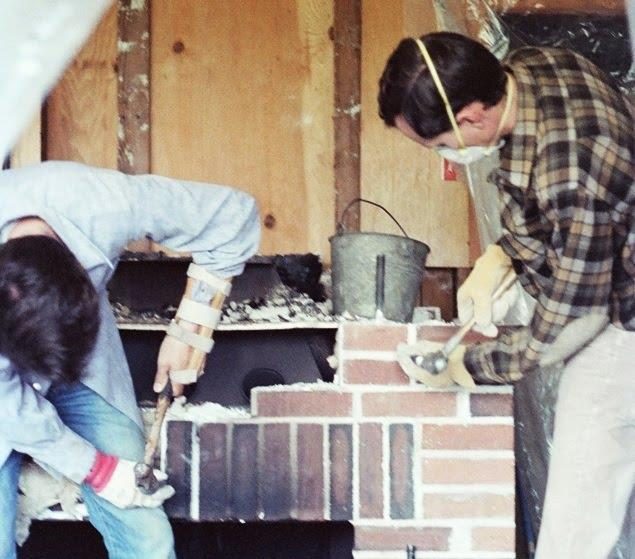
Suffice to say, the job was done very well, with Janet sharing in that arduous assignment. When Elsie and I screwed up enough courage to see what was happening, we found Dave completing the brick wall, with reused bricks, that rises behind the Vermont Castings stove in the living room.
With the Siletz property and the addition of chain saws, we now had a reliable source of wood. In anticipation of the demands of the stove (We no longer could haul wood from the beach because the salt content of the wood would corrode our fine, new stove.) I decided to build another woodshed to supplement the asbestos-covered one I'd built decades before.
I figured we'd need the extra woodshed to give the alder from the Siletz time to dry. So, we hauled four huge logs from the beach, stood them on end and patched the new, ugly woodshed together, using nothing but natural materials and cedar shakes I'd made from cedar logs we'd found.
It turned out that the new stove was so efficient, it used only a quarter as much wood as the old fireplace while turning out all the heat the cabin needed. The new woodshed wasn't much needed, but the old eyesore still stands there.
Now, the cabin truly was complete and usable year around.
Rot played a role in the next, major improvement to the cabin --replacing the porch in 1988. As you can see below, that project went well, and I’m justifiably proud of the results.
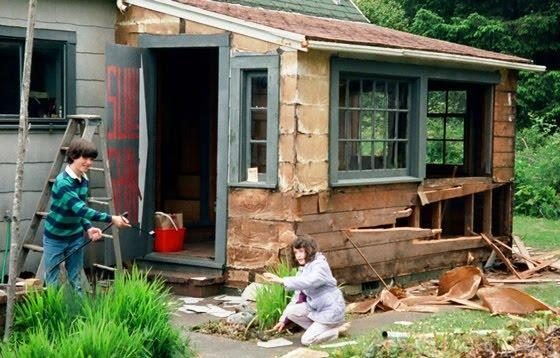
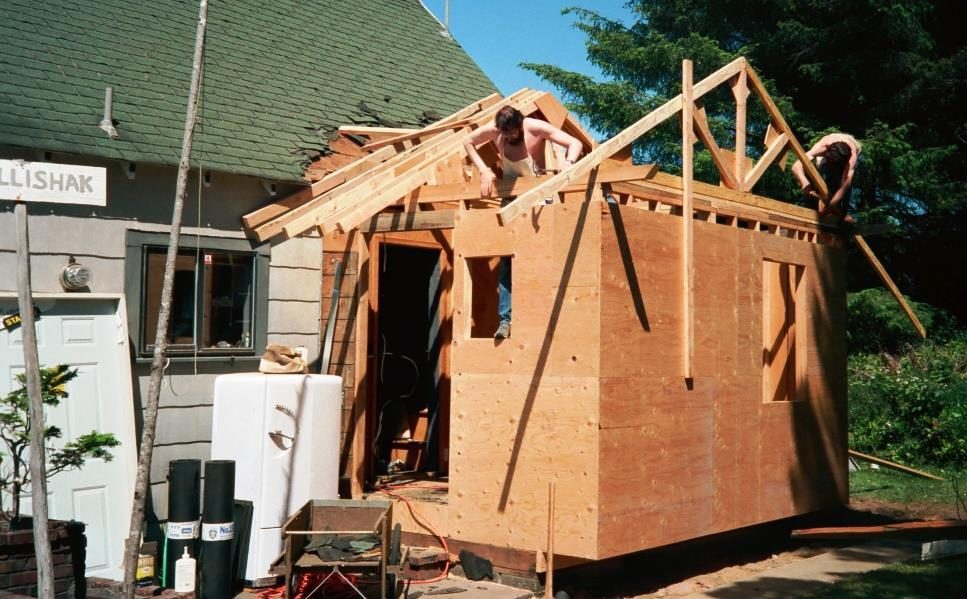
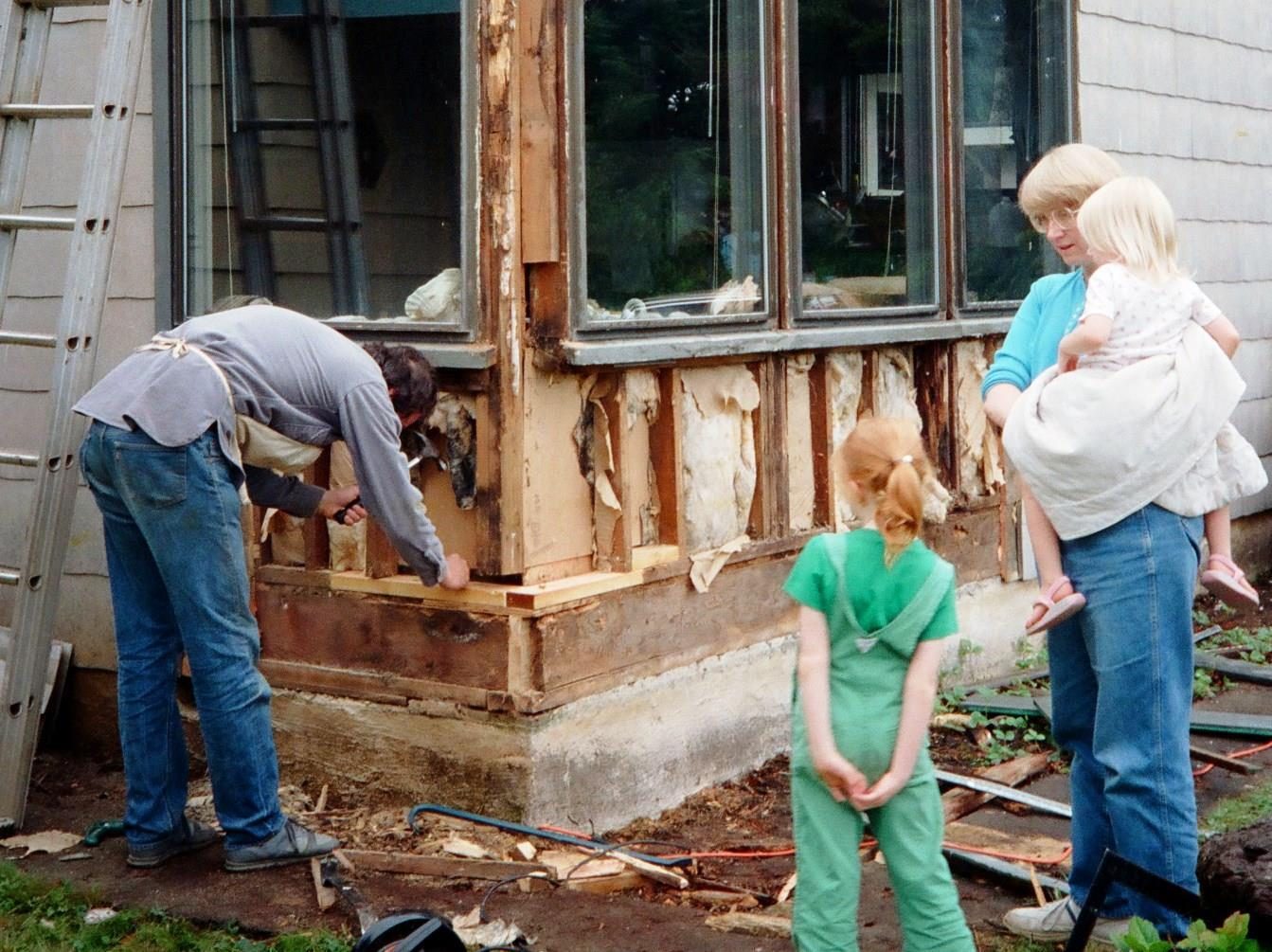
For more than 40 years we had the benefit of a minimally-restricted ocean view. We could see the ocean down the road, but we also got to look at it across the empty lot directly in front of us.
My aunt and uncle bought that property in the early years of our occupancy, to protect their own view and to have a place to build a garage. They used our parking lot for years, but it became apparent that their vehicles needed cover from the salty ocean air.
Their garage was far enough off to the side not to interfere with our ocean view. From time to time I would scour off the shrubs from their lot, to improve our view. I felt a little smug about this. They paid for the lot and paid taxes on it, and we got much of the benefit.
It was very handy having Vera and Jewell living next door. They mowed our lawn. They watched out over our house. However, after my uncle died, Vera moved and sold the place. We had to mow our own lawn much of the time, although when it got scruffy enough the people next door would mow it just so they wouldn't have to look at the tall grass.
However, I felt that whoever owned the place, we would still benefit from their wanting to keep the lot across the street unoccupied, to protect their view.
Having such close neighbors had its ups and downs. The greatest downer came from one family who ran their go-carts across our lawn in front of our living room windows. This family, when it moved, stole all the wood from our outdoor woodshed.
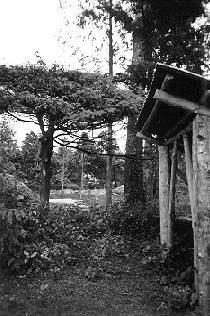
My complacency about the lot across the street was shattered, however, when the house changed hands again and became owned by a couple who planned to keep it for a rental and to build on the lot directly in front of us.
We'd also been living on borrowed time as regards the property directly behind us. Gradually, after the original cedar forest was cut down, the place had grown up in coastal pine, and served as a fine buffer between us and the highway. We knew that couldn't last, and I feared commercial development of that tract, with a huge parking lot abutting our back door.
It turned out that the house built directly in front of us wasn't as big a problem as we had envisioned. For their own reasons, they built as close as possible to the southern edge of the lot, and they cut away the brush and a big tree from the line of our view. We ended up with about as much of an ocean view as we had before they built. And I no longer had the problem of cutting the brush from that property.
Having the house next door as a rental has its advantages. First, we have had little trouble with the renters, and, secondly, it is available for us or our friends to rent when we have larger family gatherings at our place.
As for the property behind us, it is being developed into expensive private homes, and because they have little interest in looking at our shabby backside, they have built a substantial fence along our back property line. We still have our little woodlot to the south as a reminder of the wild place Lincoln Beach used to be. Fifty years has seen tremendous changes in this section of coastline. When we got there, we could, and did, pick up glass balls from Japan on the driftwood strewn beach. We found sand dollars and all kinds of indigenous shells. I remember raking crabs from under the rocks at low tide.
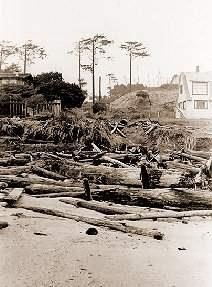
The headland to the south of our beach was four times the size it is now, with beautiful wildflowers in the spring. In the early years we'd take the children over that headland to Fogarty Beach, which at that time was totally isolated, out of reach of the highway. We climbed on the rock at Fogarty, which had a rugged pine tree atop it.
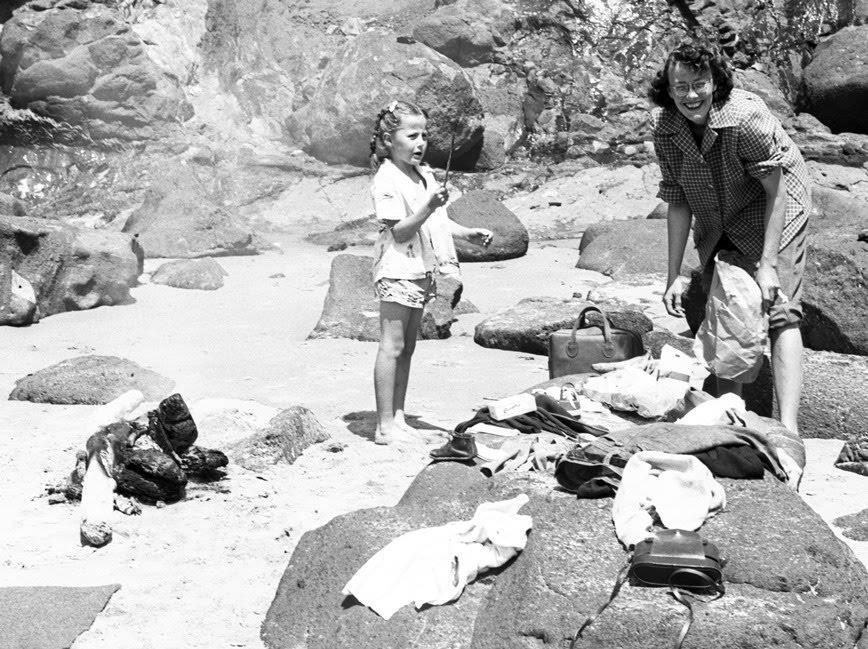
The beach today is sterile by comparison. But it isn't fair to just compare our experience with what it was like 50 years ago. It also is necessary to look into the future. And from that standpoint, we built wisely and well.
The cabin has a patina of age that gives it character. And while maintenance and improvements will be necessary, it continues to promise an ocean view, a haven from a busy world, easy access to the beach and to the fine supermarket that replaced the tiny store once run by that rascal George Betts.
Editor’s Note: This ends the history written by Wes Sullivan. The rest of this book was written by two of his sons, Dave and Steve Sullivan.
From the archive
- Wes's History — the same years in Wes's own words
- Fireplace-1981 — the newspaper column about the chimney
- Stove-2003 — the stove that replaced it, in 2003
- Fun at the Beach — the beach itself
- Cabin History timeline — every project, by year